Course Title: Advanced Tie and Dye Design, Textile Science and Fashion Entrepreneurship
At Marvell Chroma College, this program is designed as a complete immersion into the art, science, and business of resist dyeing. It is not a hobby class. It is a structured creative and technical journey that transforms learners into professional textile designers and brand thinkers.
This course begins with foundations in textile science. Students examine fiber types such as cotton, rayon, silk, and synthetic blends. They learn why cellulose fibers bond differently with reactive dyes compared to protein fibers. The chemistry is explained clearly. When students understand how dye molecules attach to fabric at a molecular level, color stops being accidental and becomes intentional.
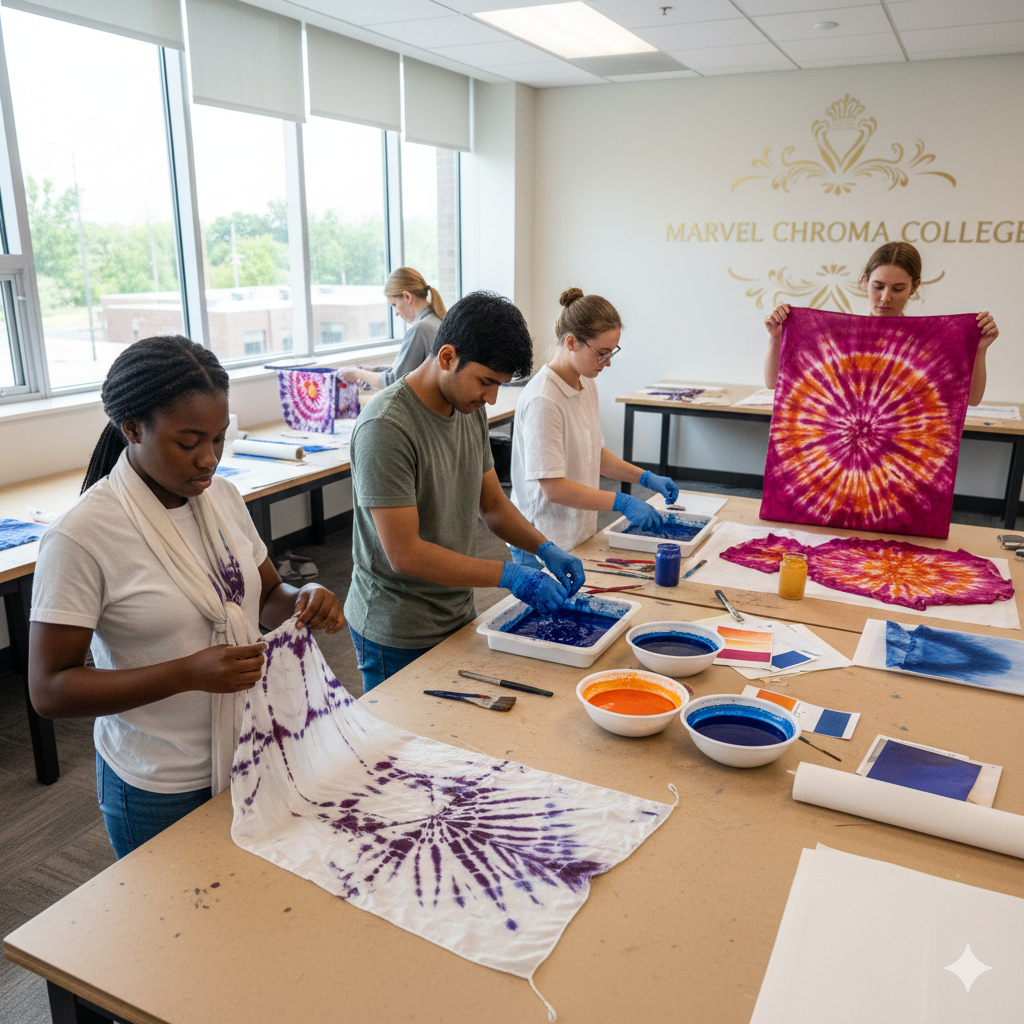
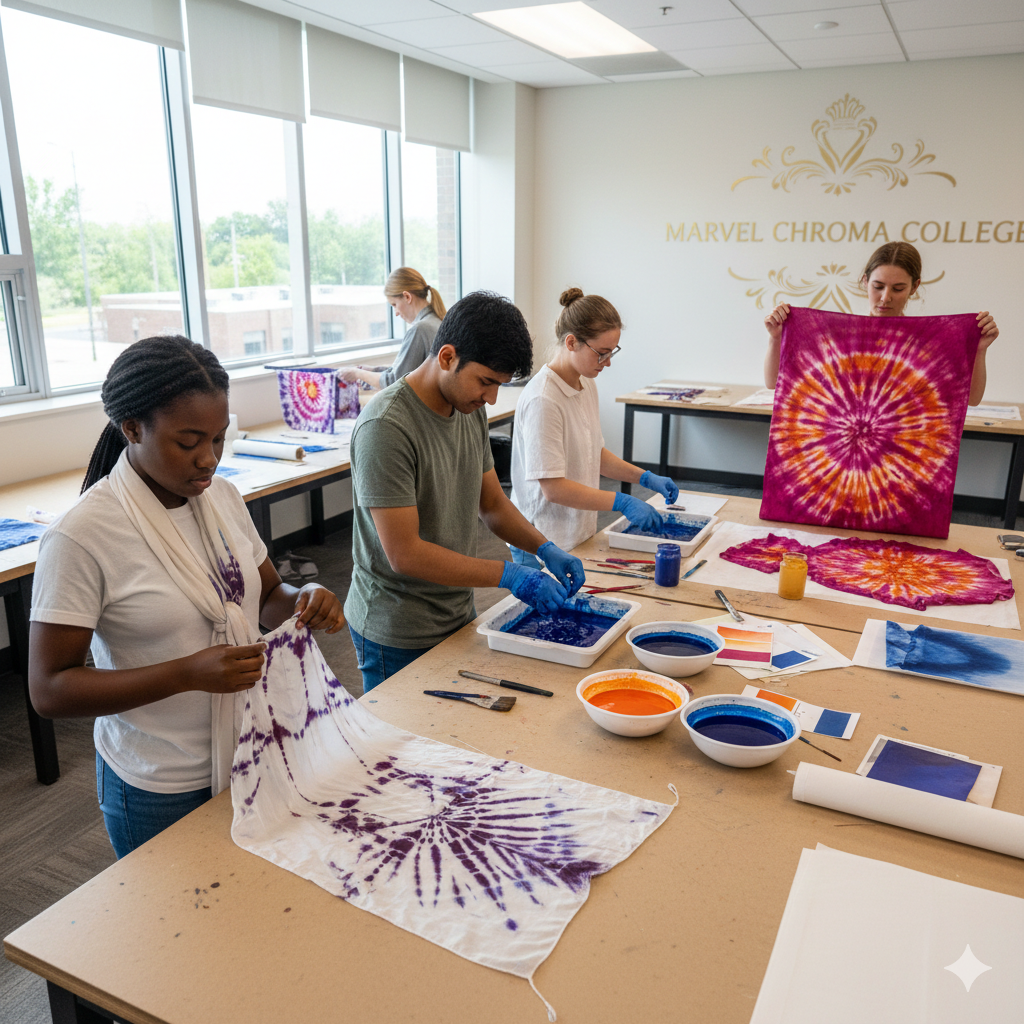
From there, the program moves into structured technical mastery of resist techniques. Learners explore spiral binding, accordion folding, clamping methods, stitched resist, shibori-inspired techniques, marbling, discharge dyeing, and layered overdye processes. Each technique is demonstrated, practiced, critiqued, and refined. Precision becomes a discipline.
Color theory is not treated as decoration. Students study hue relationships, temperature contrast, saturation control, and color psychology in fashion markets. Why does indigo communicate heritage and authority? Why do warm gradients sell differently from monochrome palettes? These questions are unpacked critically.
Safety and sustainability are core components. Learners study dye handling procedures, environmental impact, water management practices, and ethical sourcing of materials. The goal is to produce designers who are both creative and responsible.
The second half of the course shifts toward fashion application and commercial viability. Students design capsule collections using their dyed textiles. They analyze pricing structures, inventory management, production scaling, and quality control. They learn how to calculate material costs, labor time, and profit margins realistically.
Brand identity development is integrated throughout the program. Students create brand stories, visual mood boards, and market positioning strategies. They explore digital marketing fundamentals, product photography basics, and how to present collections professionally.
Assessment includes practical studio projects, a mid-term technique portfolio, and a final capstone collection. The capstone requires students to conceptualize, produce, brand, and present a cohesive tie and dye collection suitable for retail or exhibition.
By the end of the program, graduates will be able to:
Execute advanced dyeing techniques with technical accuracy
Select appropriate dyes and fabrics based on chemical compatibility
Design intentional color palettes
Produce professional textile samples and finished garments
Build and present a commercially viable product line
Communicate their creative vision confidently
This course recognizes that fashion is not magic. It is chemistry, design thinking, logistics, and storytelling working together.
At Marvell Chroma College, students do not simply create patterns. They learn to control color, shape markets, and build sustainable creative enterprises.